The
Urbanising
Arctic
Autonomous Landscapes
A new wave of urbanisation in the Russian Arctic:
Carbon Capture and Server Farms
________
With the increase of global temperatures, the Earth faces a moment of singularity: the opening up of the Arctic. For the first time in human history, ships are able to travel the Northern Sea Route all year round without any help from the nuclear-powered icebreakers that used to support them in the past. At the same time, people will live in permanent settlements as far north as never before. The decrease of the Arctic ice is the result of a global process, and at the same time, its effects will resonate in the rest of the world. Fossil fuels harvested in the Arctic Circle have been burned in the economic powerhouses of the West and the East, changing the composition of Earth’s atmosphere. The “Breath of the Earth” is changing.
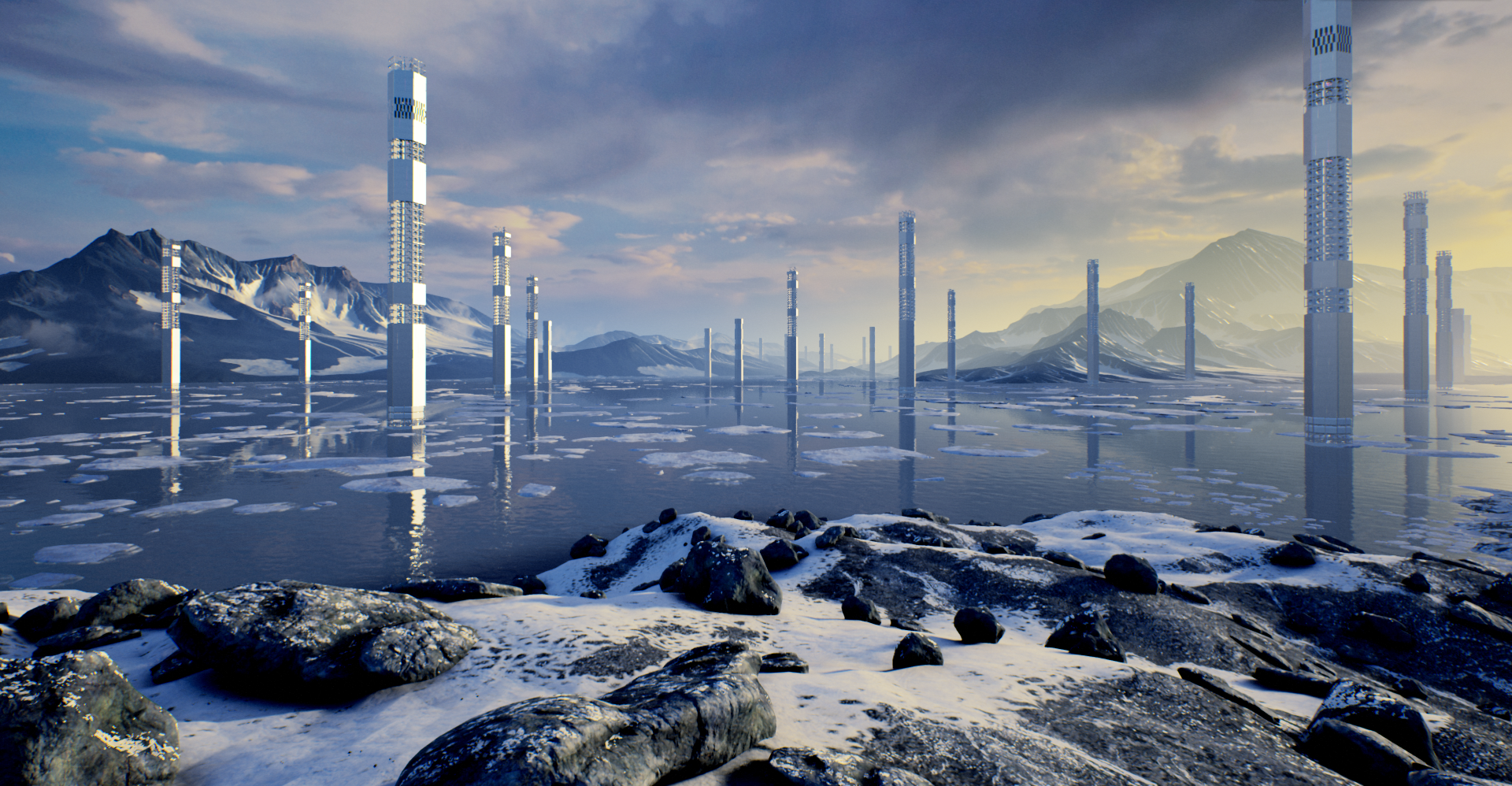
We propose to tap into the vast geological reserves that have been exploited for resource extraction in the fossil era and return the carbon from the atmosphere into the ground. Ships that have previously brought natural gas and oil to Europe and China will return with captured CO2 to the Arctic reservoirs. At the same time, carbon air capture technology will be rolled out through modular building kits across the Arctic Circle, since the atmospheric concentration is higher here than anywhere else on earth, it is the most crucial place to extract it.
Meanwhile, a new development emerges: Optic data cables are planned to connect Europe and China via the Russian Arctic seas. If provided with clean energy, that opens the North up to the rapidly growing economy of data centres. Since all of those activites rely on the same narrow set of requirements - energy, space, water and cooling - the Russian Arctic is on track for a new era of urbanisation. Although this time it will not be centred around humans, but will involve large automated landscapes that are shaped by machine rules and machine aesthetics.
Arctic Climate Transformations
________
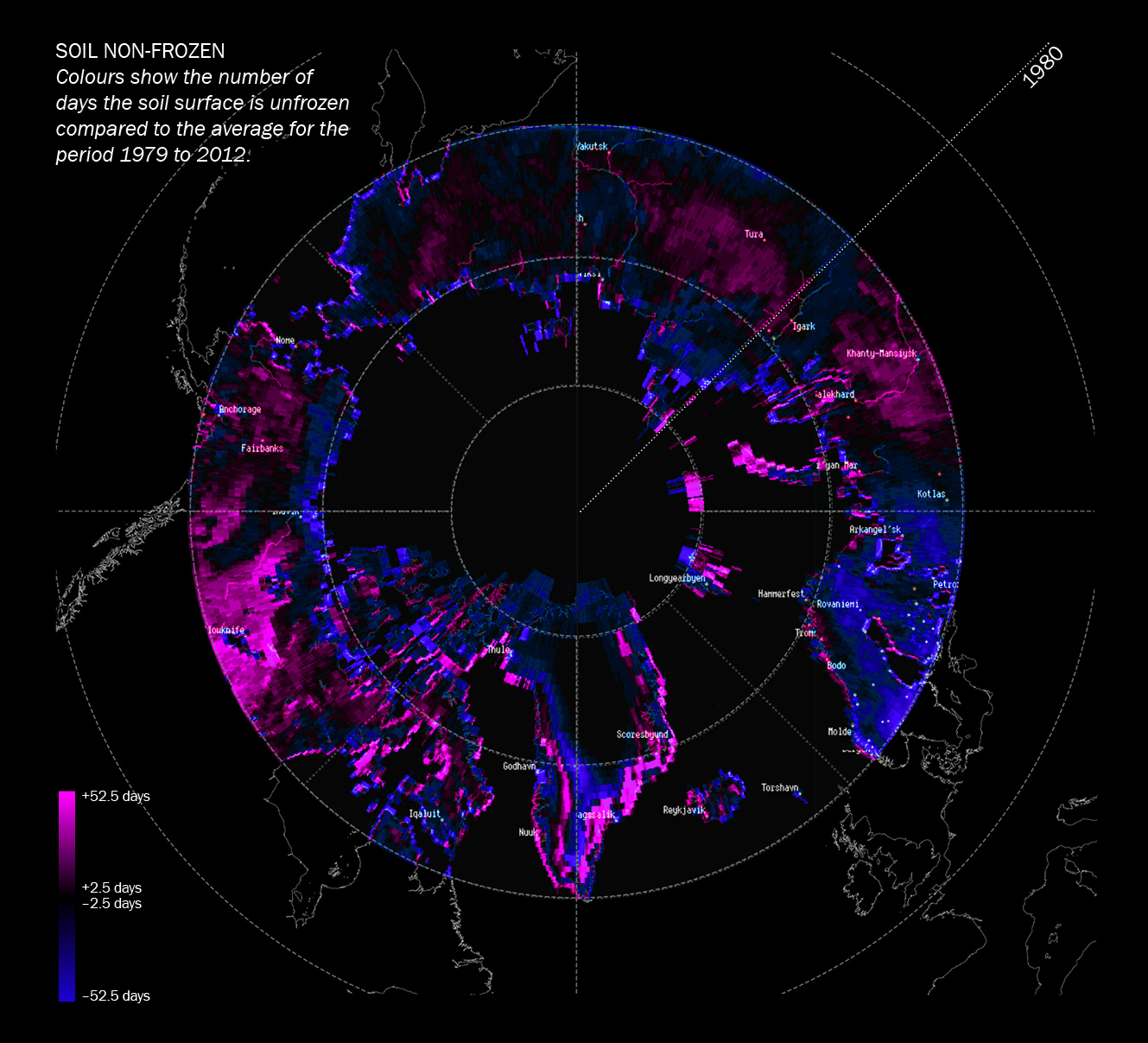
Arctic anomalies between
1980-1985
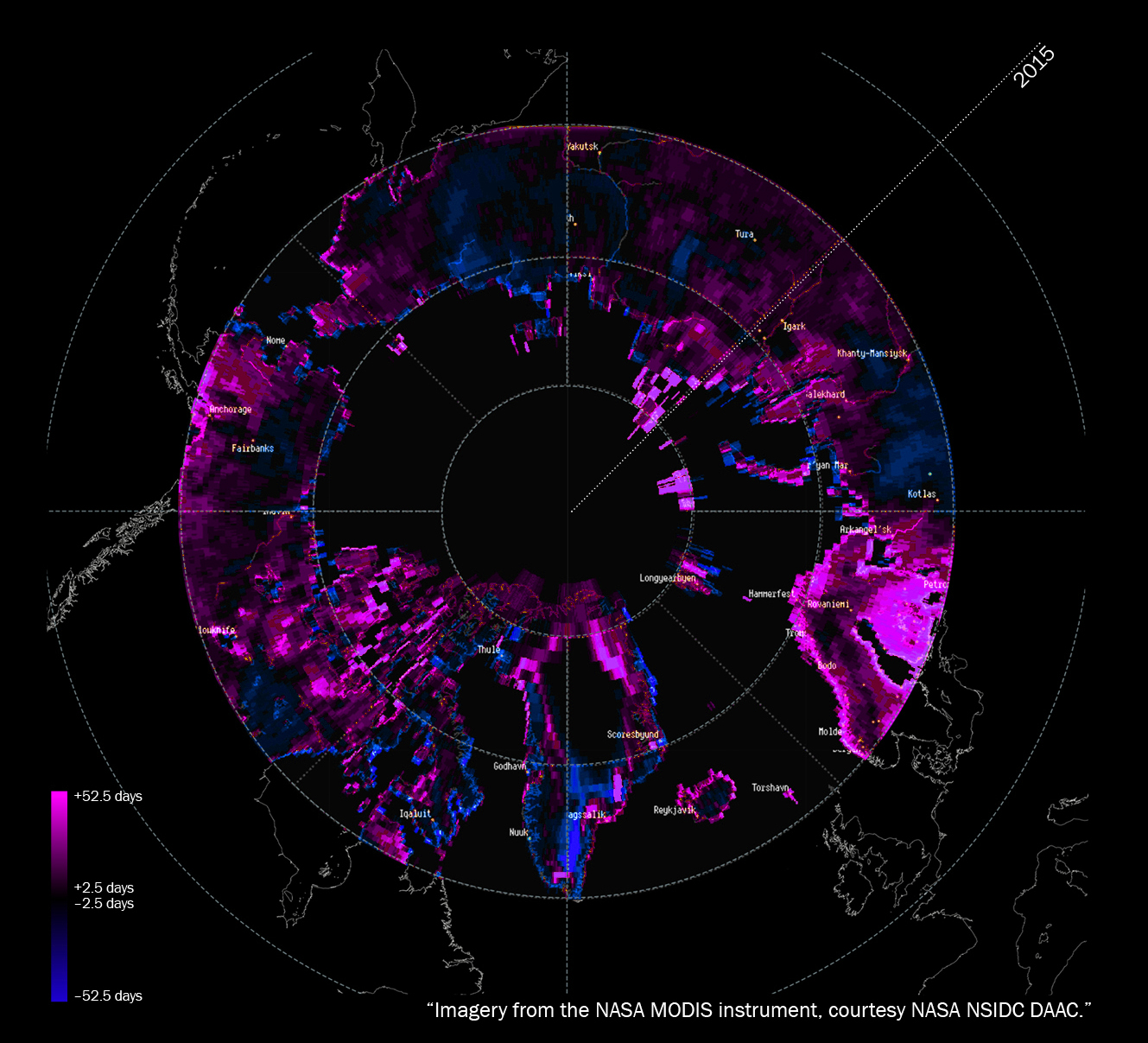
Arctic anomalies between
2010-2015
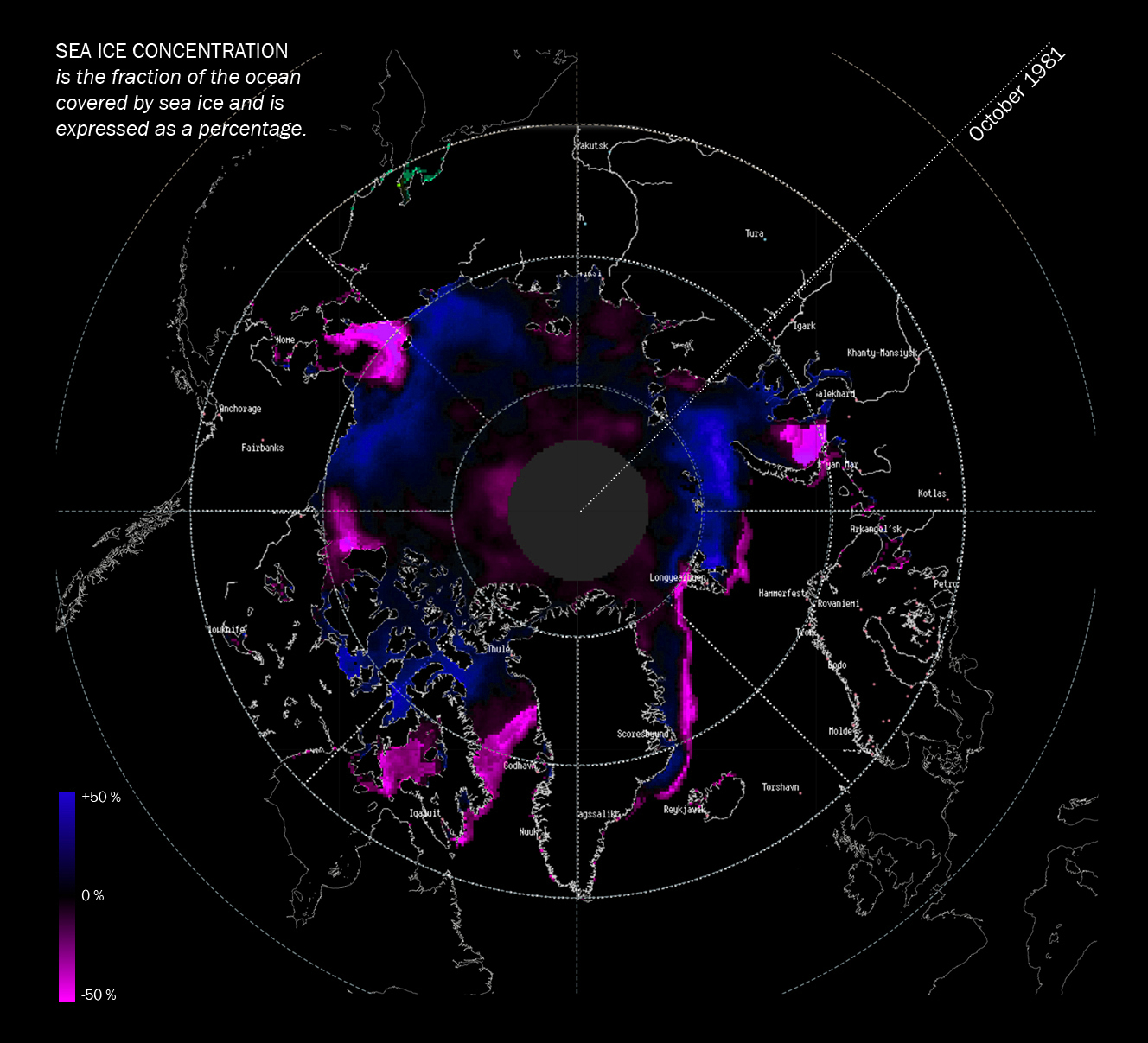
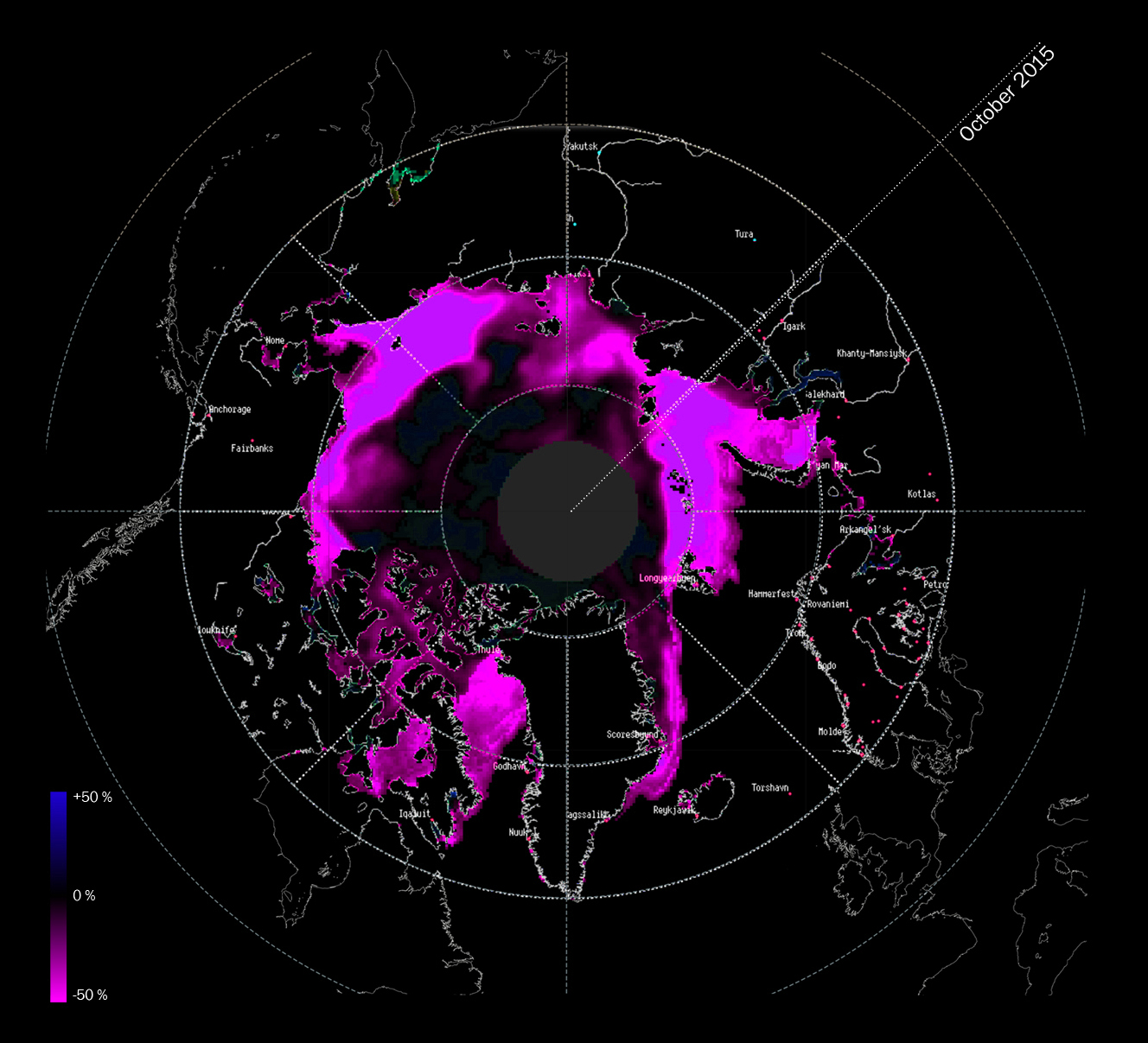
+ Sea Ice coverage
_____
Changes in sea ice extent and sea ice concentration are useful indicators of the Arctic’s changing climate. Sea ice cover in the Arctic Ocean also plays an important role in the Earth’s climate system. In summer, sea ice can reflect as much as 70% of incoming solar radiation back to space. When sea ice disappears, the dark ocean surface absorbs much of the incoming radiation, reflecting less than 10%. This extra energy increases the ocean temperature and temperature of the overlying atmosphere.”
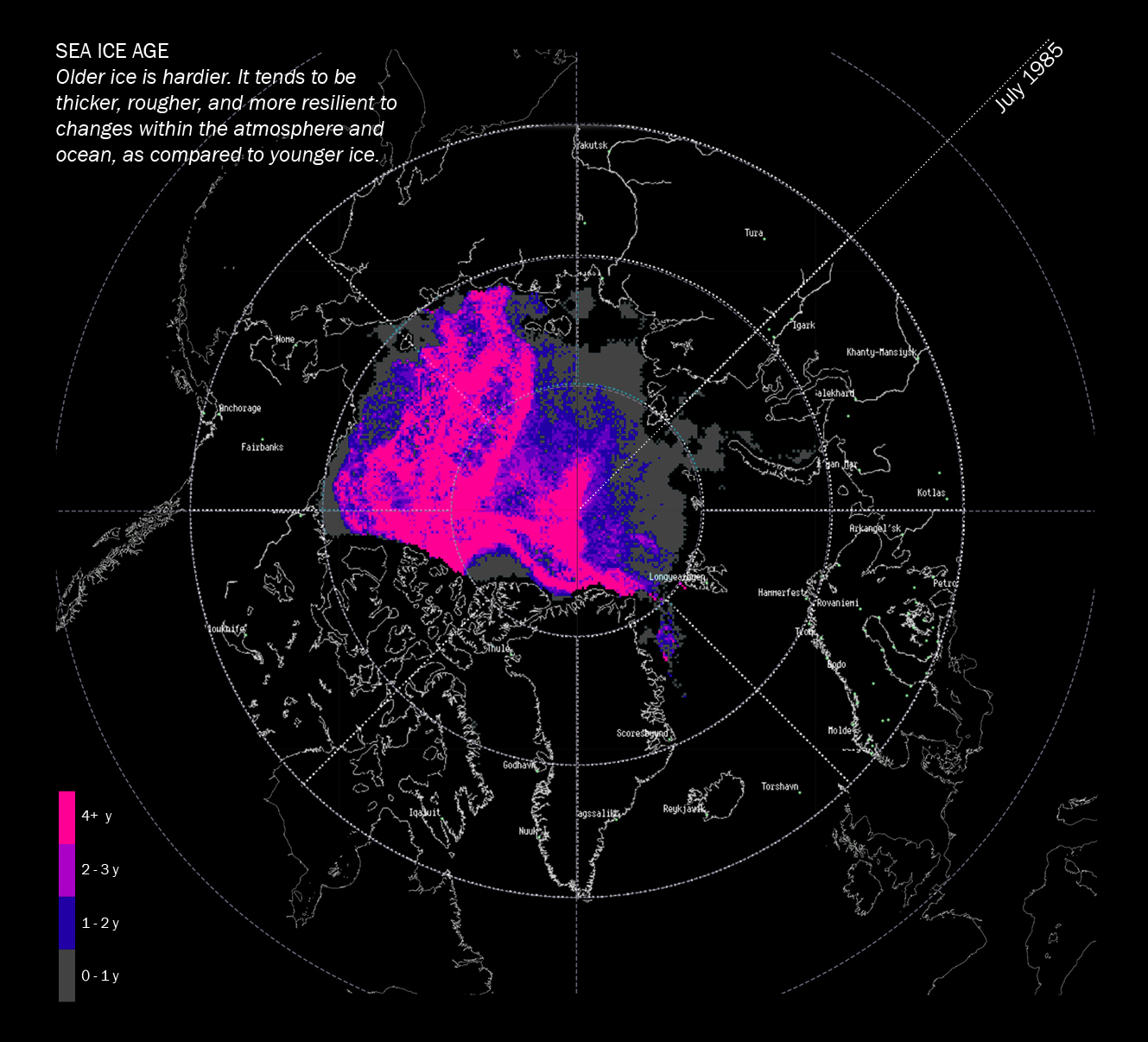
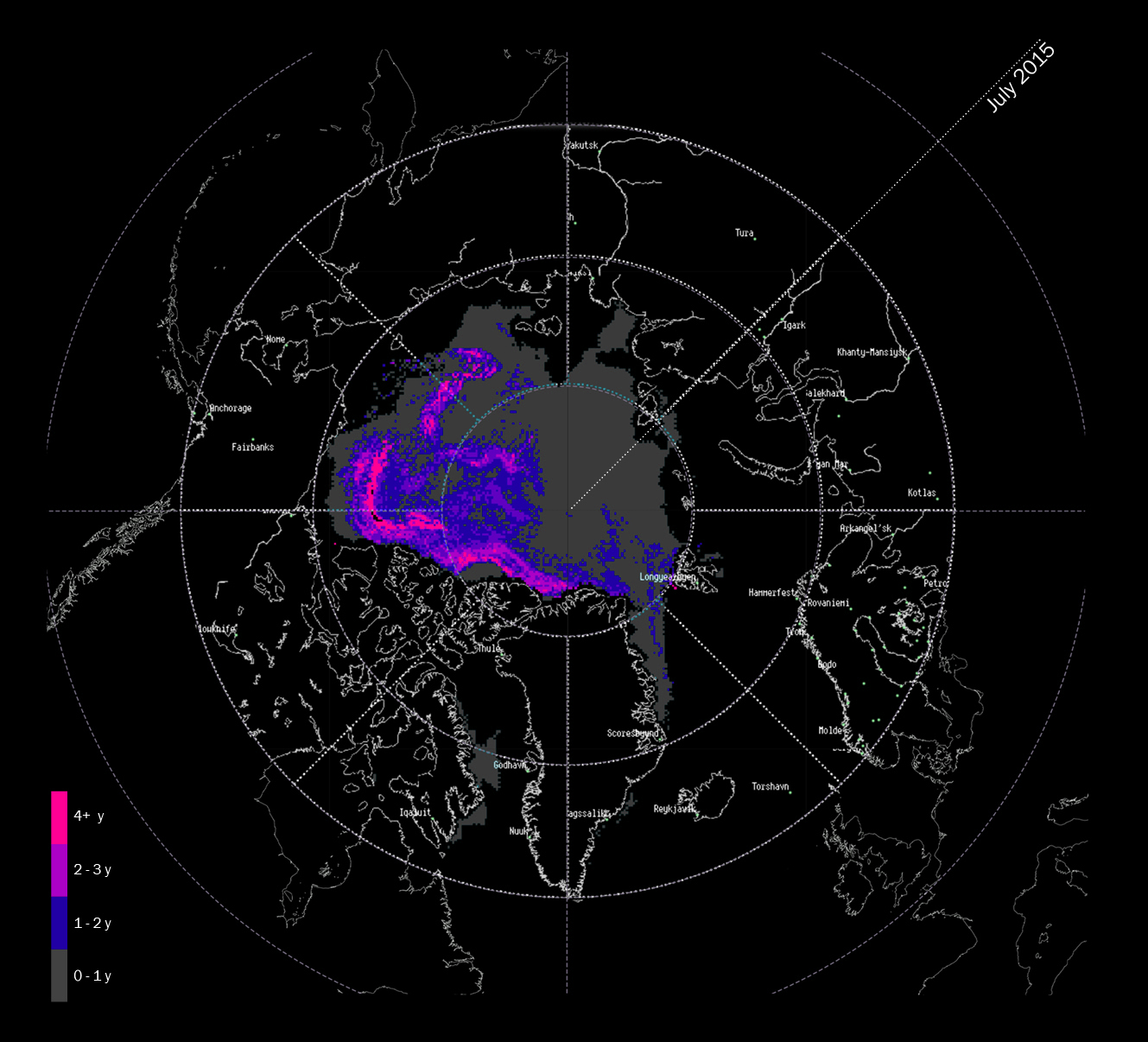
+ Ice age
_____
While looking at sea ice, apart from the extent, one of the most important factors is its age. Every year the ice melts during the summer and freezes again over the winter. In recent years, summers have been constantly warmer, melting larger extents of the ice, and today the majority of the ice cap is now composed by younger ice. Young, thin ice can melt and break easier than older ice, thus contributing to the cycle. (NSDIC, Sea Ice Age by Month: More information)
+ Vegetation
_____
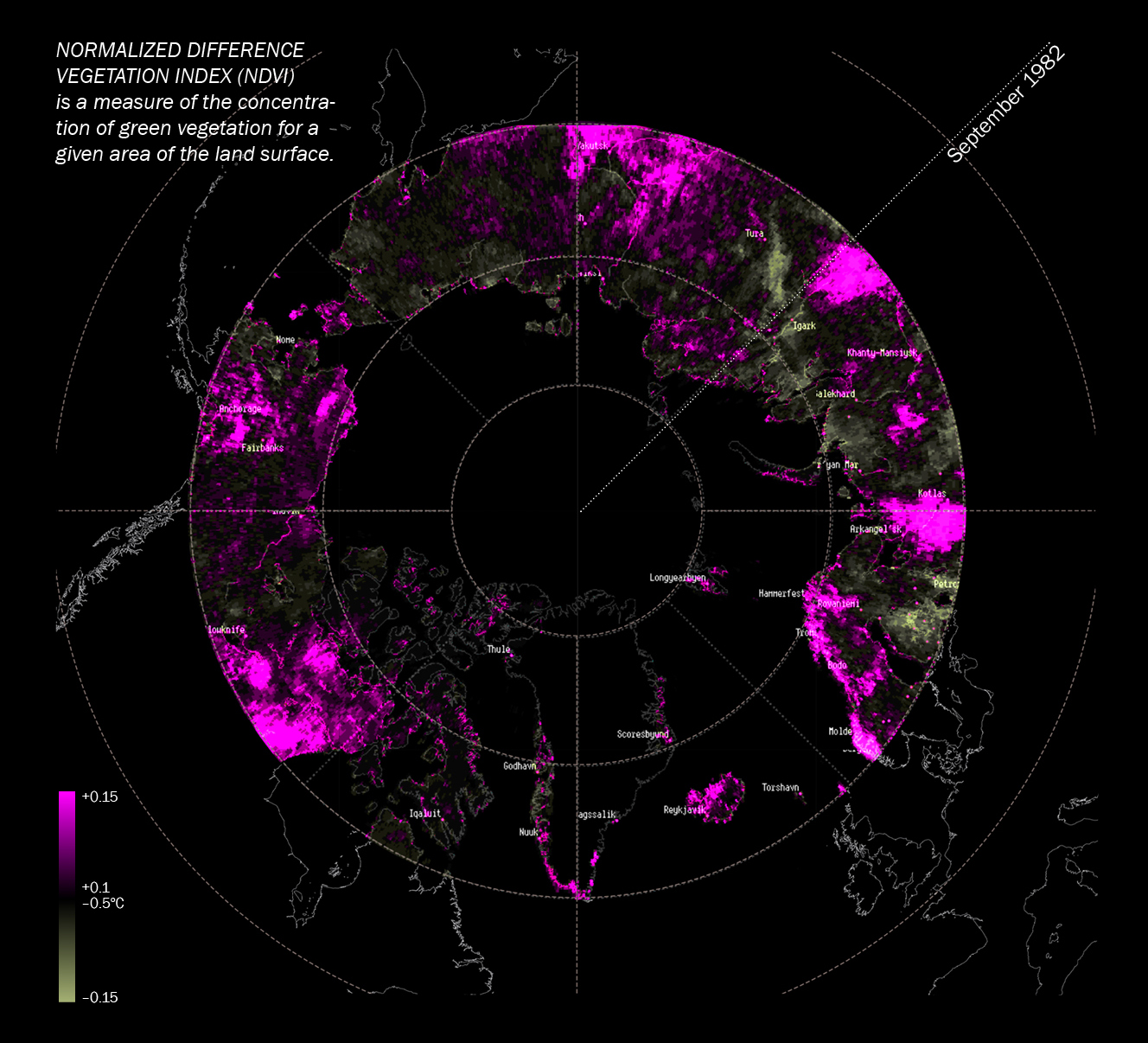
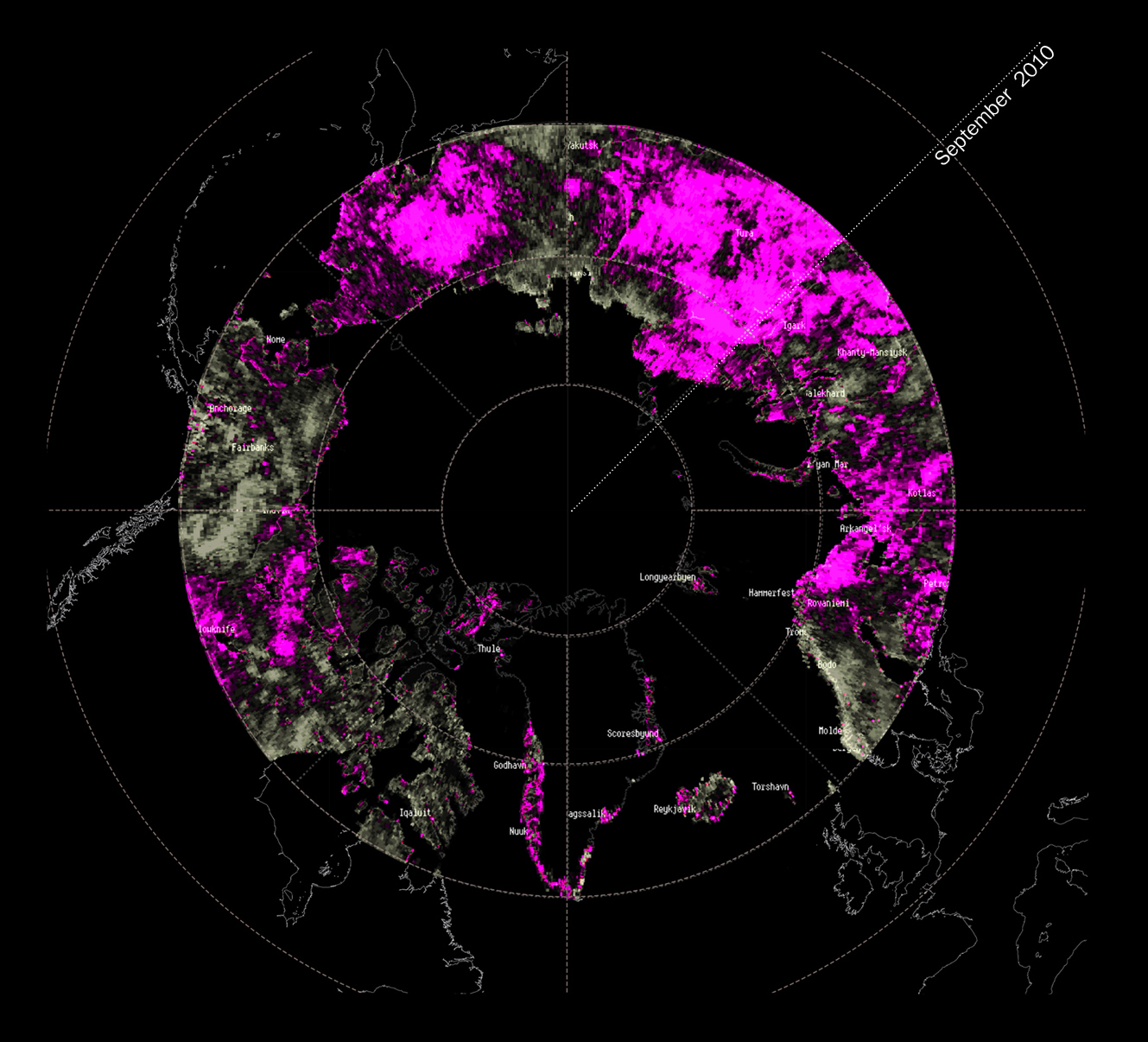
Increments in Normalized Difference Vegetation Index (NDVI) is a measure of the concentration of green vegetation for a given area of the land surface. In the Arctic, increases of greenery have been observed during the past 20 years, especially during the summer, and these are linked to both an increase in shrubs and longer growing seasons. (NSDIC, NDVI: More information). While a greener Arctic might sound as positive due to the capacity of plants to absorb and process CO2, “tree or shrub expansion holds heat at the ground level rather than reflecting it away, which thaws permafrost and causes decomposition of organic matter held in the ground, releasing greenhouse gases” (Rohn, 2016).
+ Soil non-frozen
_____
When analysing the data collected on the frozen soil in the Arctic region, strong increases in the duration of the non-frozen period appear around 2005. “These longer non- frozen periods in recent years are associated with earlier spring thaws.” (NSDIC, Soil Non-Frozen Period: More information). When the permafrost melts, “new bodies of water are created [...] and due to water’s capability to hold heat, these new lakes exacerbate the decline of permafrost there.” (Rohn, 2016)
+ Air temperature
_____
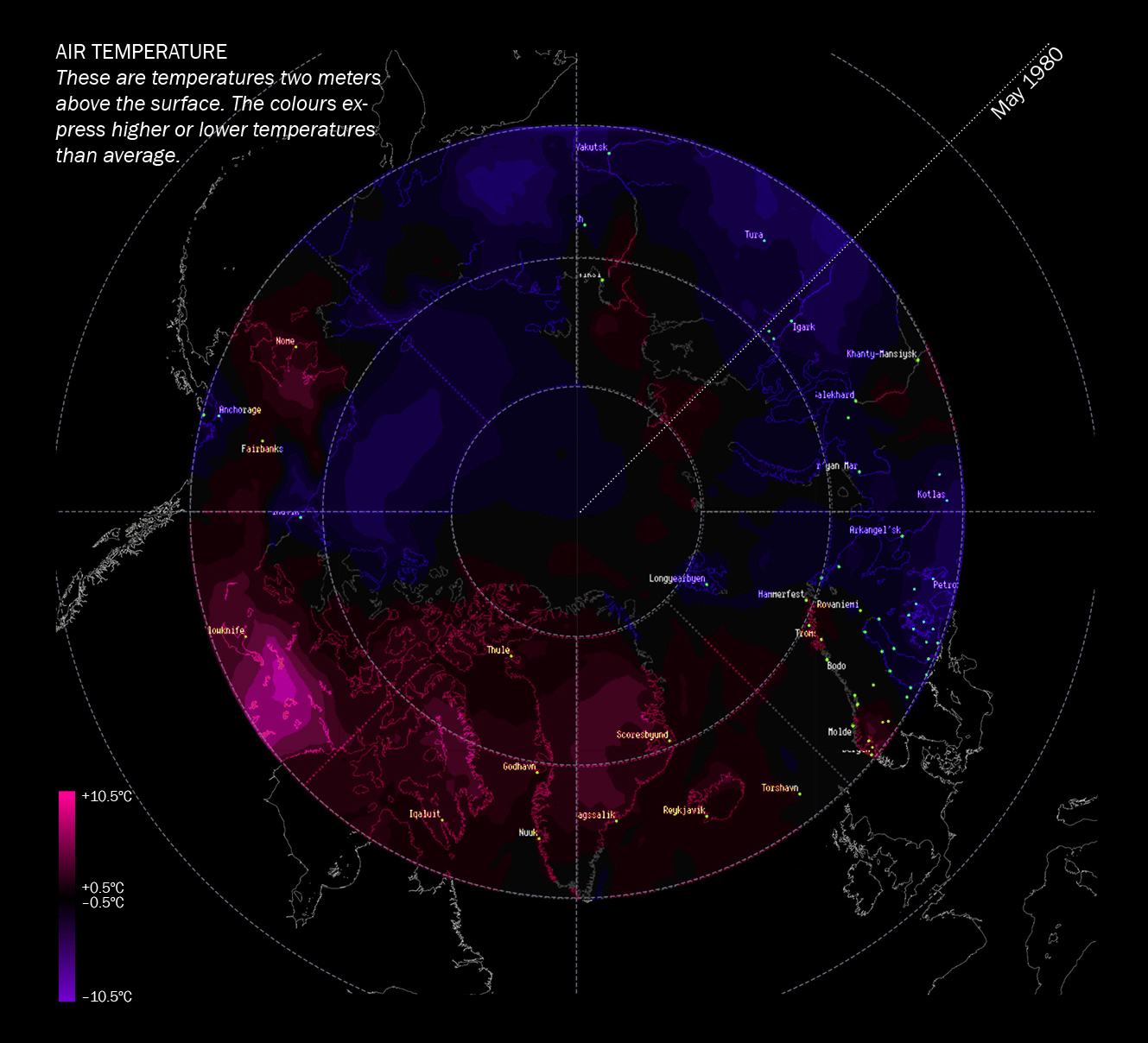
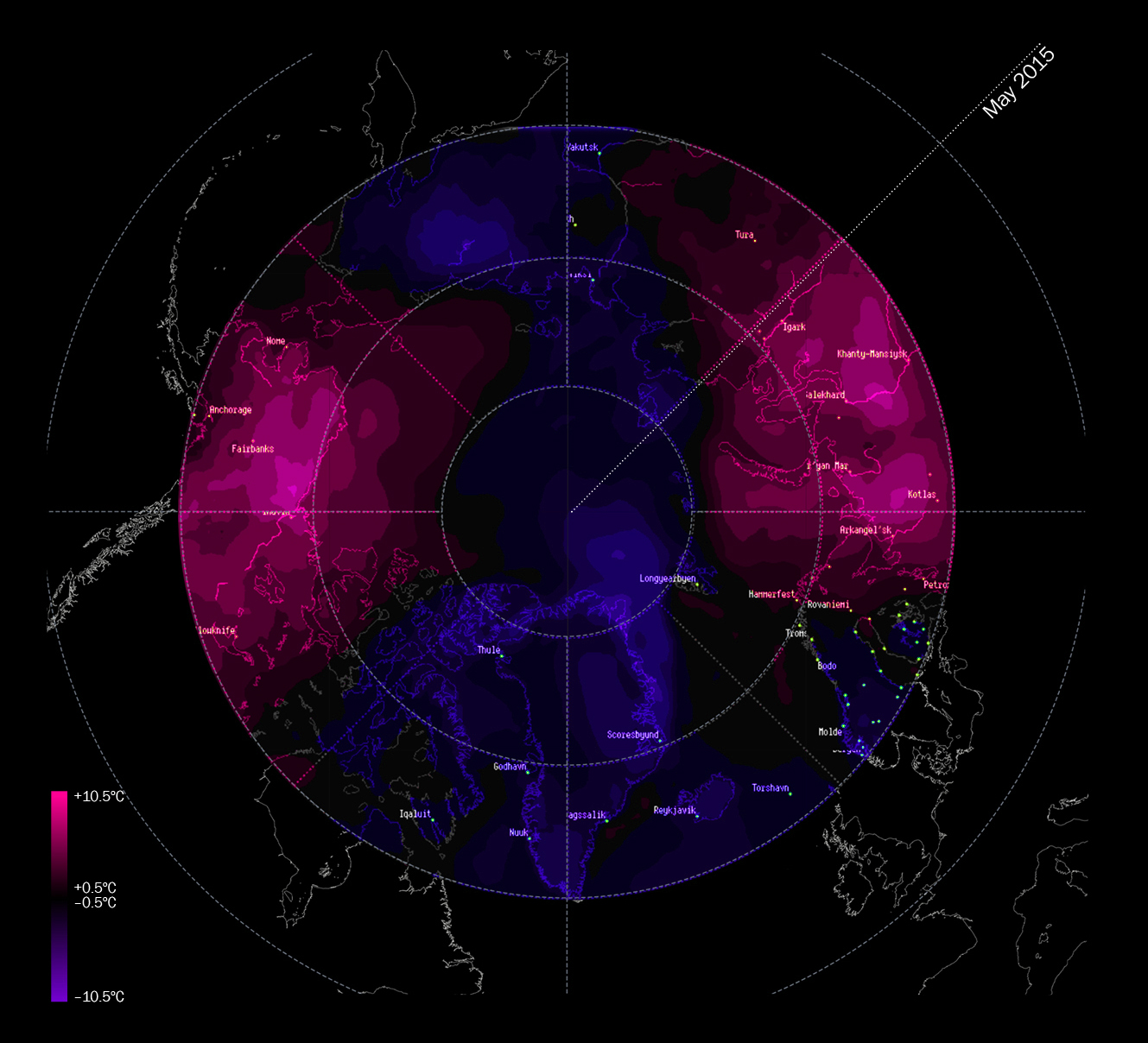
Average air temperatures over the ice-covered Arctic Ocean tend to stay just above the freezing point during summer, mainly because the sea ice melts at its freezing point (-1.8oC). (NSDIC, Air Temperatures: More information). However, in areas where the ice has melted away, the dark ocean absorbs great amounts of solar energy; therefore, the air above those points tends to be warmer When the summer is about to end, the heat the ocean gained in summer is released back to the atmosphere and starts to cool off again, reaching its freezing point once more. Warmer summers responsible for a loss on ice coverage are also responsible for warming up the air over the surface.
The 4th Wave of Urbanisation
________
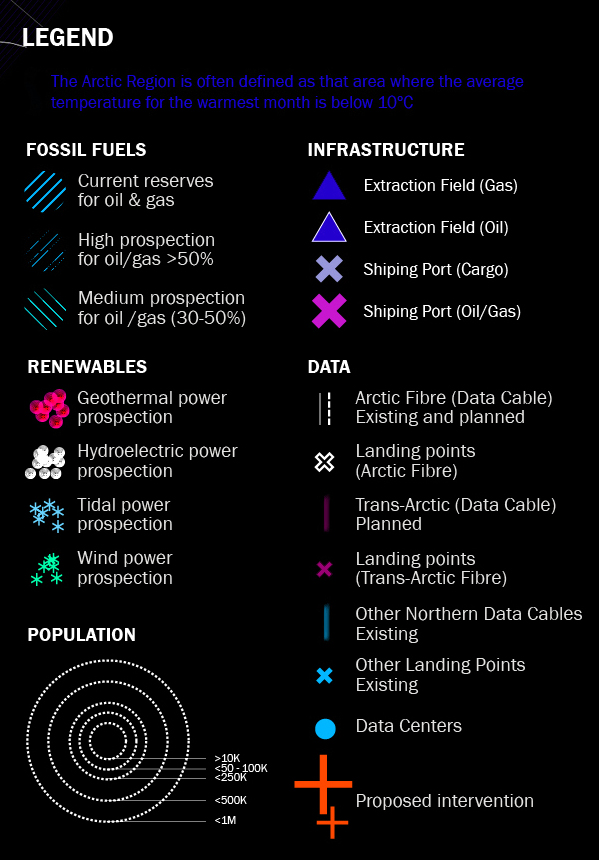
Urbanism Without Cities
_____
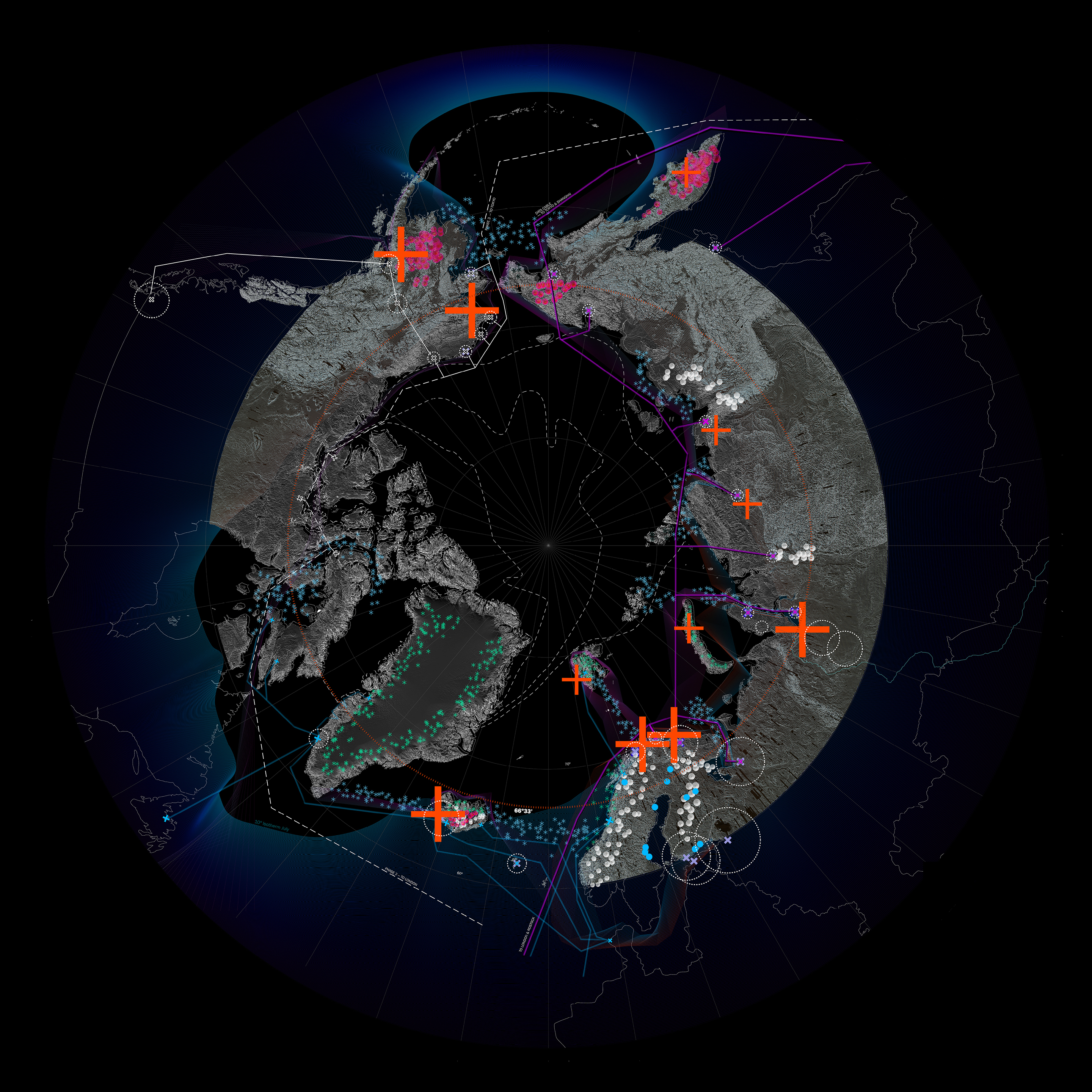
Urbanism within the Arctic Circle today is produced within the context of a new phase of industrialization related to extractive industries, and this has a direct impact in the natural and political environment. Even though the Arctic has experienced a decline in population, especially when comparing the Russian
Arctic during Soviet times to what it is today, the region has continued to be developed year after year. This urbanization is taking place not in the shape of traditional cities, but instead, infrastructure is taking over; transforming sublime white deserted landscapes into the hinterland of the world.
The world’s energy consumption since the Industrial Revolution has depended almost completely on fossil fuels, and 13% of the actual known reserves plus 30% of the estimated oil and gas of the world, are located in the Arctic Region (Arctic oil and natural gas resources, 2012). Due to the decrease of sea ice coverage and the melting of the permafrost, new territories —like islands that were once covered on ice—have been discovered, and larger areas of the gas and oil reservoirs that were once unattainable, are now within reach.
A Story of Oil and Gas
_____
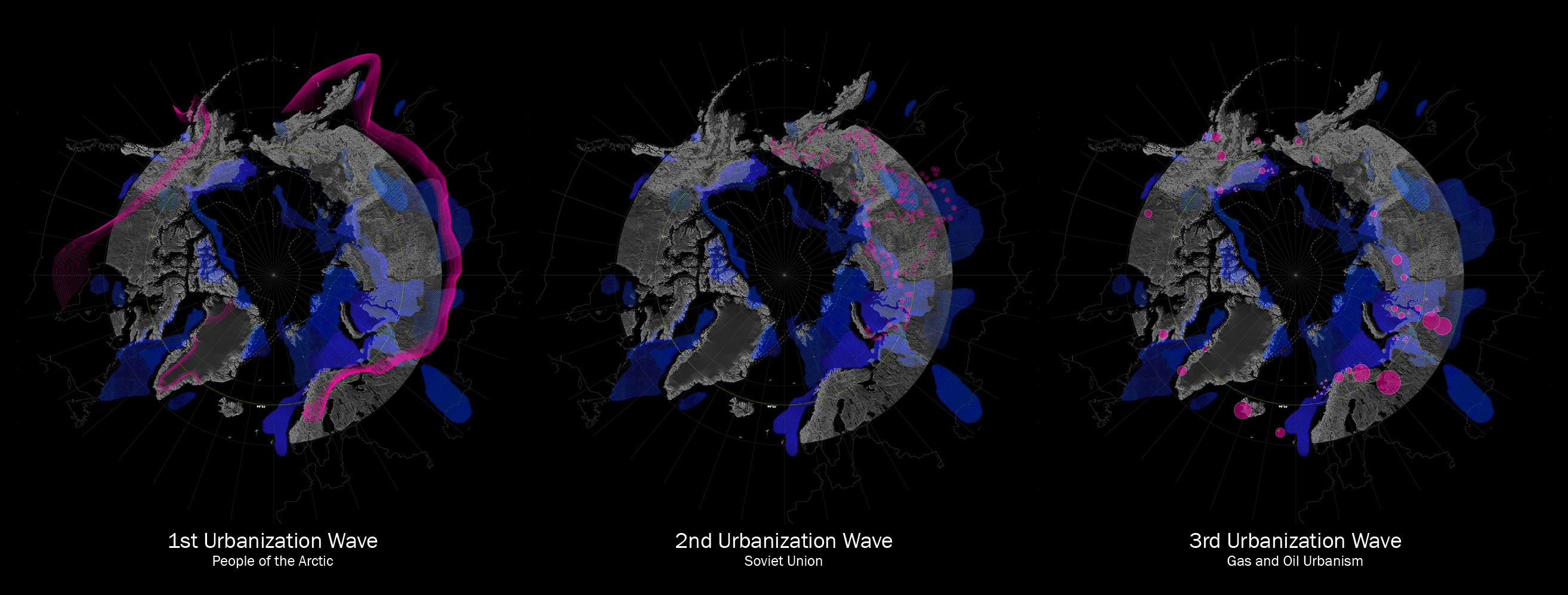
Marlene Laruelle (2019) divides the Arctic urbanisation in three waves: the “colonial” wave, the “Soviet” wave, and the “globalised” wave. The first one goes from the sixteenth century to the early twentieth century, when the first inhabitants arrived to the Arctic, adapting to the harsh conditions and having little impact on the environment. The second one focuses on the Soviet attempt to urbanise the Arctic with a permanent population by investing in cities equipped with all sorts of social infrastructure. However, after 1989, the population started to migrate South and today it is possible to find these old cities designed to allocate over 10,000 people, with less than a thousand.
By the end of 1960s, the “globalised” wave began. During this time, we see the development of the first oil and gas fields. From this moment on, the Arctic industrialisation has not stopped, but if anything, increased exponentially, with the oil and gas industry as main actors
Due to the harsh weather conditions, Company Towns, small villages of less than 5,000 inhabitants per season ―each of which normally lasts from three to four months―, have proliferated along the Arctic Circle. The main facilities found in these developments are those used during the different industrial processes: exploration, extraction, refinement, transportation. The human dwellings are secondary priority.
Data Cables and Server Farms
_____
A more recent intervention ―and more imperceptible― in the Arctic waters are the submarine internet cables. Distance between two endpoints increases the latency or delay before a transfer of data and a melting Arctic makes the Arctic a convenient short-cut between Asia, Europe and America, reducing the distance by almost half. Two Arctic routes have been announced to date, nevertheless, only one has made it to the development stage. The “Arctic Fibre”, acquired by Quintillion in 2016, runs along the Northwest Passage, on the edge of Canada’s Arctic coastline. This cable intends to link data from London to Tokyo; however, today only the first phase has been completed. This phase was developed in 2017 and covers 1900 km of the Alaskan Arctic; a cable runs between Point Hope, right to the Bering Strait, and Prudhoe Bay, left to the Canadian border.
The second route intends to follow the Northern Sea Route, flanking the Russian Arctic. Named ROTACS (Russian Optical Trans-Arctic Cable System). The original route plans to link London and Tokyo, while laying land-points on the way. This plan was touted around 2014 and then forgotten, until more recently after the first phase of the “Arctic Fibre” was finished and China issued its “Data Silk Road” white paper, an important part of the Belt and Road Initiative (BRI). In 2017, China Telecom Corp expressed interest in operating the cable, while Finland, Russia and Norway also expressed their excitement. “As Chair of the Arctic Council, Finland has a key interest in achieving the “connectivity” component of its broader “exploring common solutions” chairmanship theme. Finland’s feasibility study into what it calls an “Arctic Connect” cable concluded that a second Trans-Arctic cable would be a “win-win-win” for Europe, Russia, and Asia” (Buchanan, 2018). The first landing point would be in the northernmost Norwegian port of Kirkenes, where it would start its way to the East along the Northern Route and will continue all the way to Tokyo and Shanghai. This could benefit Russia’s plans to diversify its investments by opening a new commercial front by mining cryptocurrencies, which with Russia’s potential for renewable energy, could be more profitable than the oil and gas extraction (Gilbert, 2017).
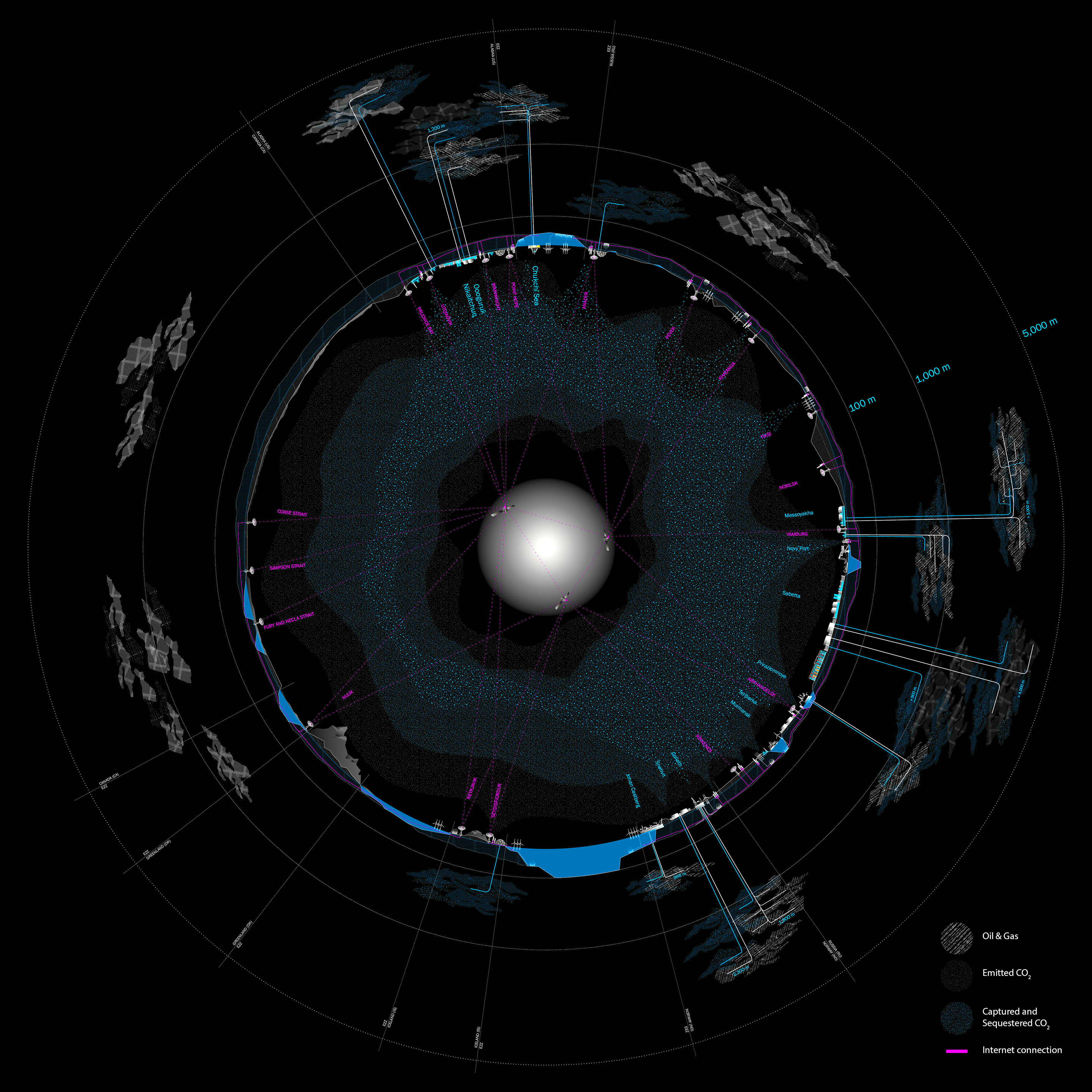
Arctic Cyborg Landscapes
________
Sabetta & the Post-Anthropocene
_____
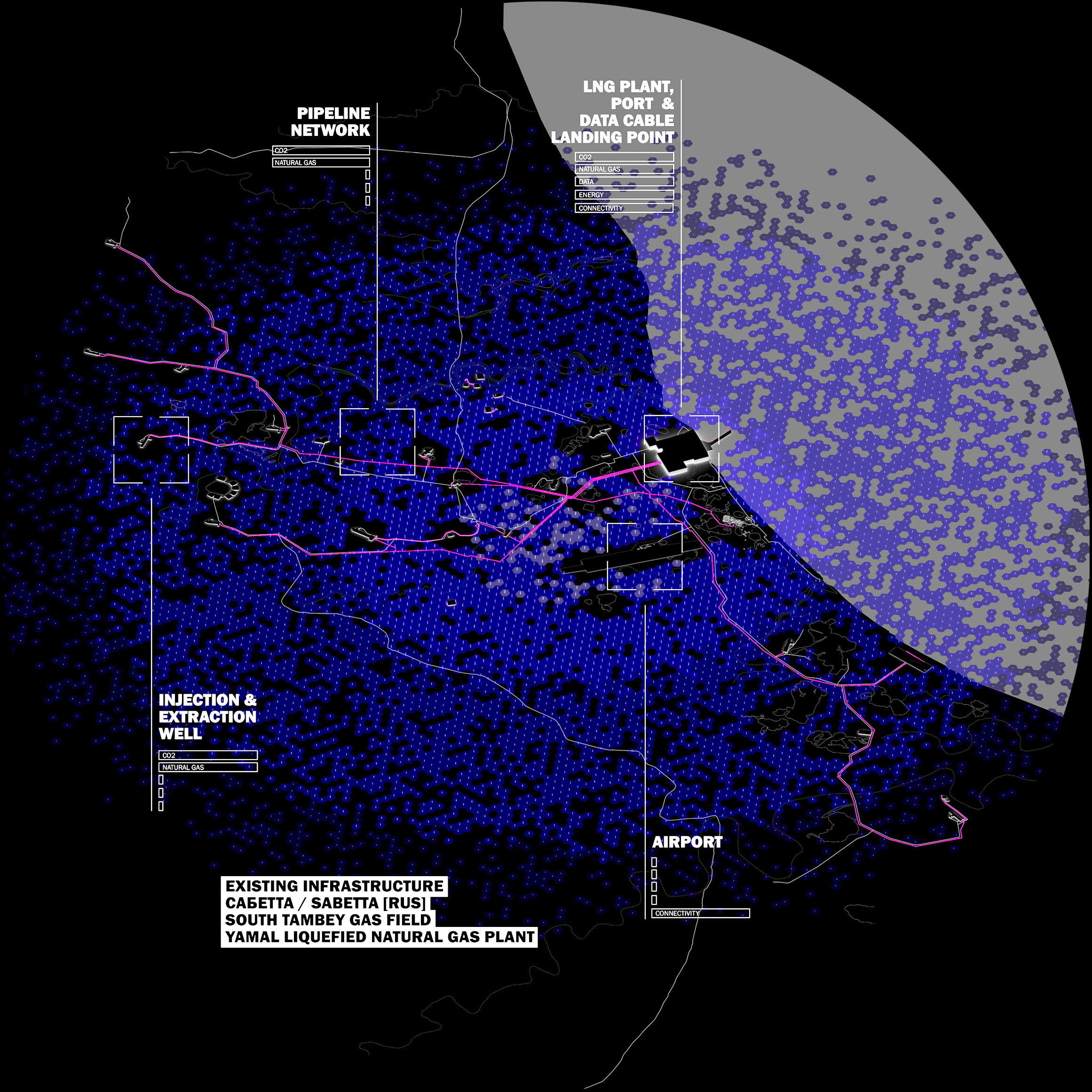
In recent years, towns like Sabetta with 3,000 inhabitants have sprung up. It was built and is now owned by a private joint venture company consisting of the Russian energy company Novatek (50.1%), French energy giant Total (20%), the China National Petroleum Organisation (20%) and China’s Silk Road Fund (9.9%). Due to its remote location and the harsh conditions, most buildings and plant sections have been assembled as far as possible in China before being shipped on large, specialised ships to Sabetta to enable rapid on-site construction. A large international port has been built, as well as housing and facilities for the new inhabitants and even an ice hockey arena for their local team. All is centred around the vast LNG plant that processes the gas that has been pumped out of the ground in the surrounding gas field. Pipelines are stretching out into the thermokarst landscape that connect the 19 multiwell pads to the plant. These pipelines are accompanied by new roads and electricity lines to service each pad, creating a tentacle-like network of connections centred around the plant complex. The role of humans at this new frontier of urbanisation is mainly that of observation, supervision and maintenance. Their presence is focussed on the centre of the settlement where accommodation and facilities for the inhabitants are provided, whereas the hinterland with its numerous wells and the massive infrastructure of transporting the gas from the wells to the plant and from there onto the ships is in the domain of a Machine Landscape (Young, 2019). It provides an insight into a time that Bratton (2013, 2019) describes as the Post- Anthropocene. Spaces that are crucial to the modern life of humans such as oil rigs, global shipping routes, ports and server farms are at the forefront of urbanisation and create so called Automated Landscapes (Otero- Verzier, 2019; Young, 2019). Often, they are “environments that not only have no need for human presence but require human absence in order to function” (Manaugh, 2019, p.38). This half human, half non-human landscape is the new face of urbanisation in the Arctic.
Carbon Capture and Storage
_____
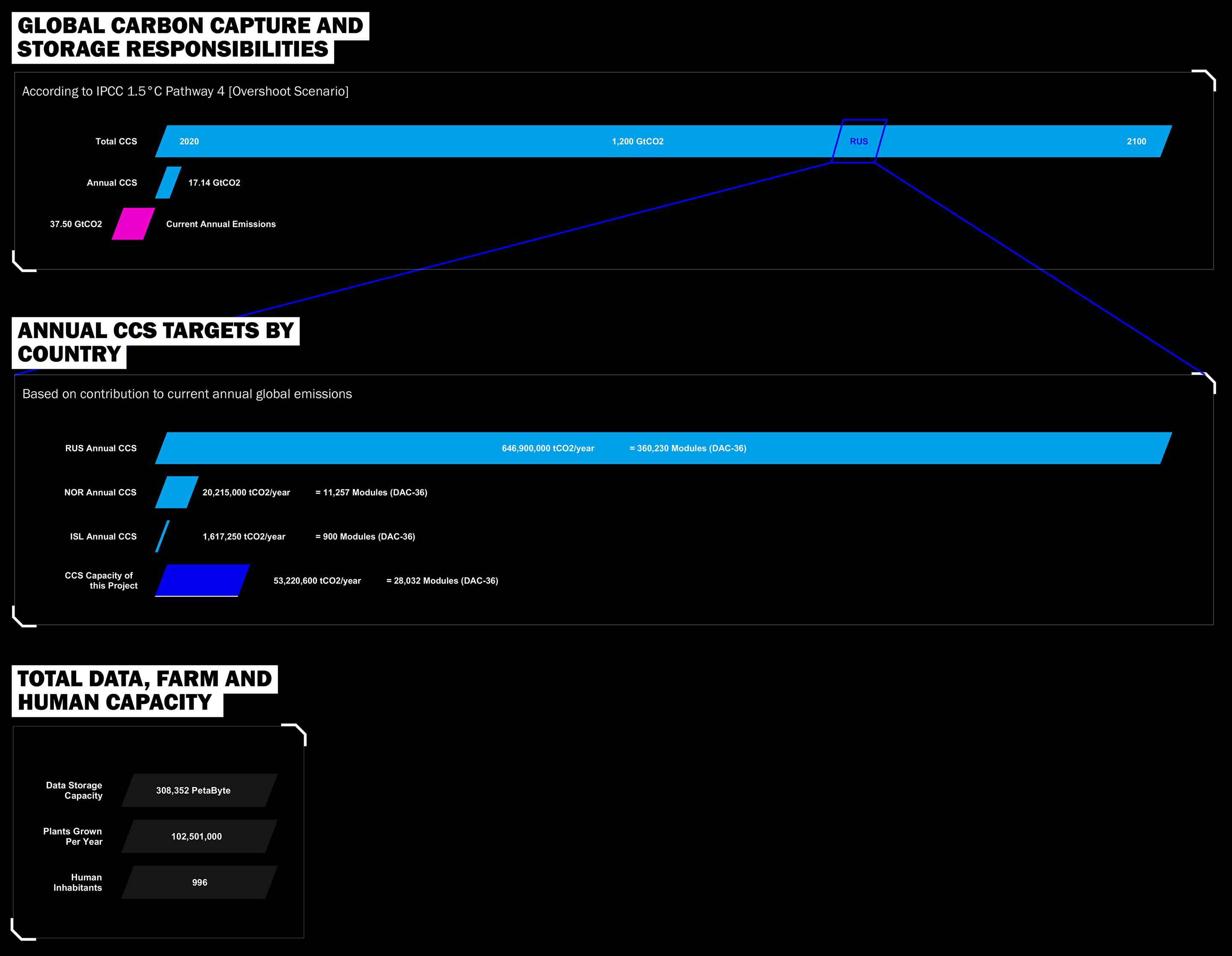
The IPCC (Intergovernmental Panel on Climate Change) regularly publishes a special report on the impacts of global warming of 1.5°C above pre-industrial levels. In this report, four different pathways towards a net zero emissions future are presented. While paths 1-3 see a drastic decline of CO2 emissions from 2020 onwards, pathway 4 shows a slower decline in emissions which then needs to be offset by reducing carbon levels in the atmosphere through the use of CCS technology. This means that the temperature of the earth will temporarily rise above 1.5°C but will later drop again as CCS is in full operation. It is thus called the overshoot scenario.
There are several ways to capture carbon, it can, for example, be captured at large emission sources like power plants, where biomass is being burned for energy. This project however looks at a technology called Direct Air Capture (DAC) where turbines equipped with filters extract the CO2 from the atmospheric air. This technology is already in operation; however, there the constrains that need to be sorted still include large scale application at an affordable cost. Some of the most well-known companies that currently use it are Carbonengineering and Climeworks. A common way to process the condensed form of the extracted CO2 gas is to re-inject it into depleted reservoirs. This is especially practical as the reservoirs have been explored and mapped and the necessary infrastructure has already been built and paid for during the fossil consumption period. This includes pipeline networks, processing facilities, ports, roads, electricity networks, workers housing, and most importantly the wells that are used to extract the gas. These can be switched to pump the CO2 back into the ground in the empty reservoirs. Further down, it is shown how much CO2 needs to be captured for the pathway 4 overshoot scenario and how much individual countries are playing a part in this.
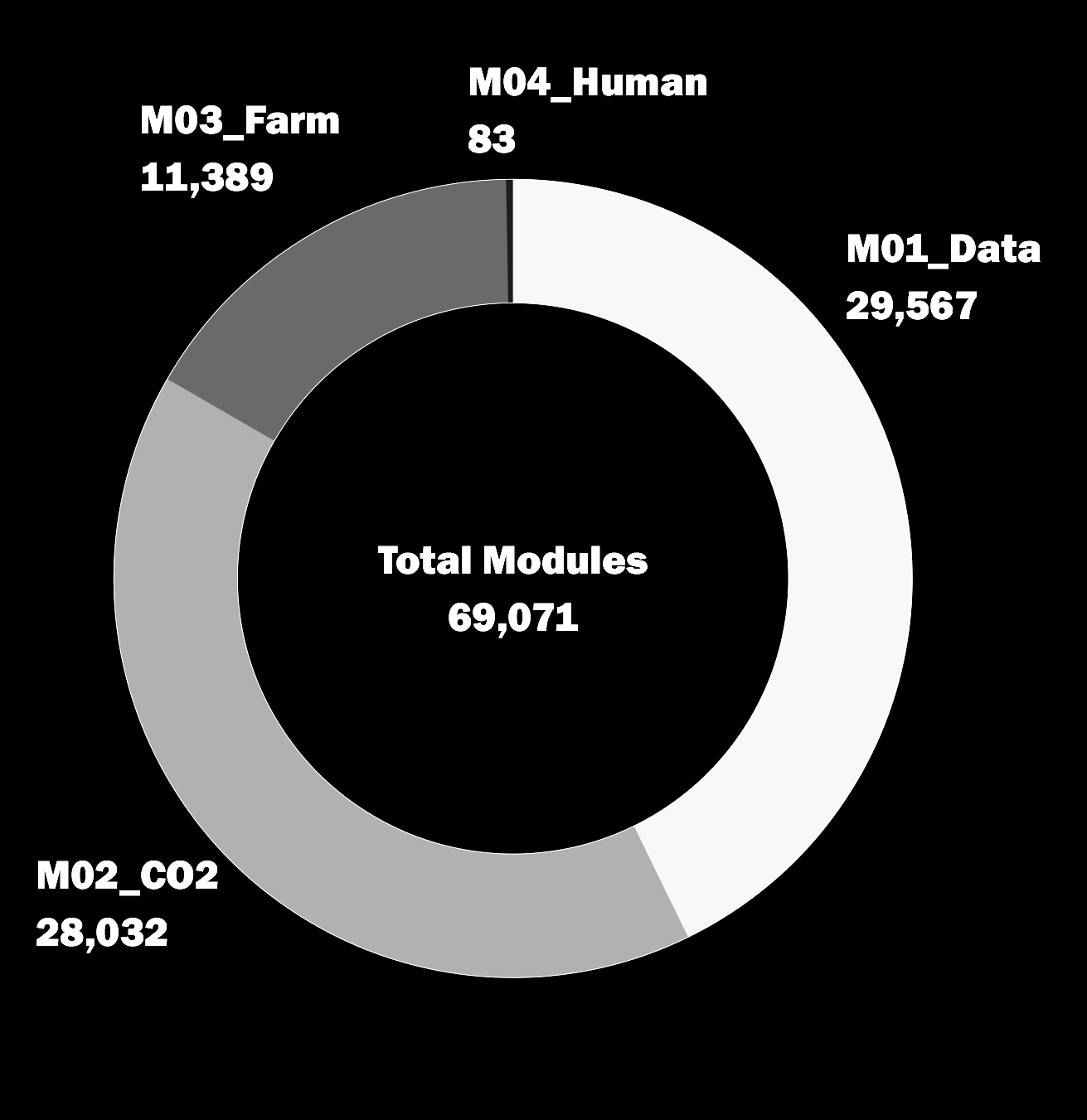
The contribution of the intervention this project proposes in the Sabetta area is quite significant with 53,220,600 tons of CO2 extracted per year. While it is still less than 10% of Russia’s CCS responsibility, it is more than double of that of Norway which is already trialling different CCS technologies. It is also fifty times the one of Iceland, which already has a DAC and CCS site that works with Climeworks’ technology and stores CO2 in a basaltic rock formation. As measures like a carbon tax are rolled out in different ways (cap-and-trade system, technology transfer, and many others), offsetting mechanisms like CCS become financially interesting for industries or companies with a large carbon footprint. With climate researchers currently proposing a price on carbon around 135€ (146$) per ton our proposal would be able to annually generate 7.2bn € (7.8bn $). This is combined with an estimated annual revenue of the data centres of 10bn € (10.8bn $) for 308,352 PetaByte storage capacity (calculated with Amazonaws DeepGlacier Long Term Storage). This annual income of 17.2bn € (18.6bn $) over an estimated 30- year operating period would amount to 516bn€ (558bn $).
Modular Building Kit
________
Building kit
_____
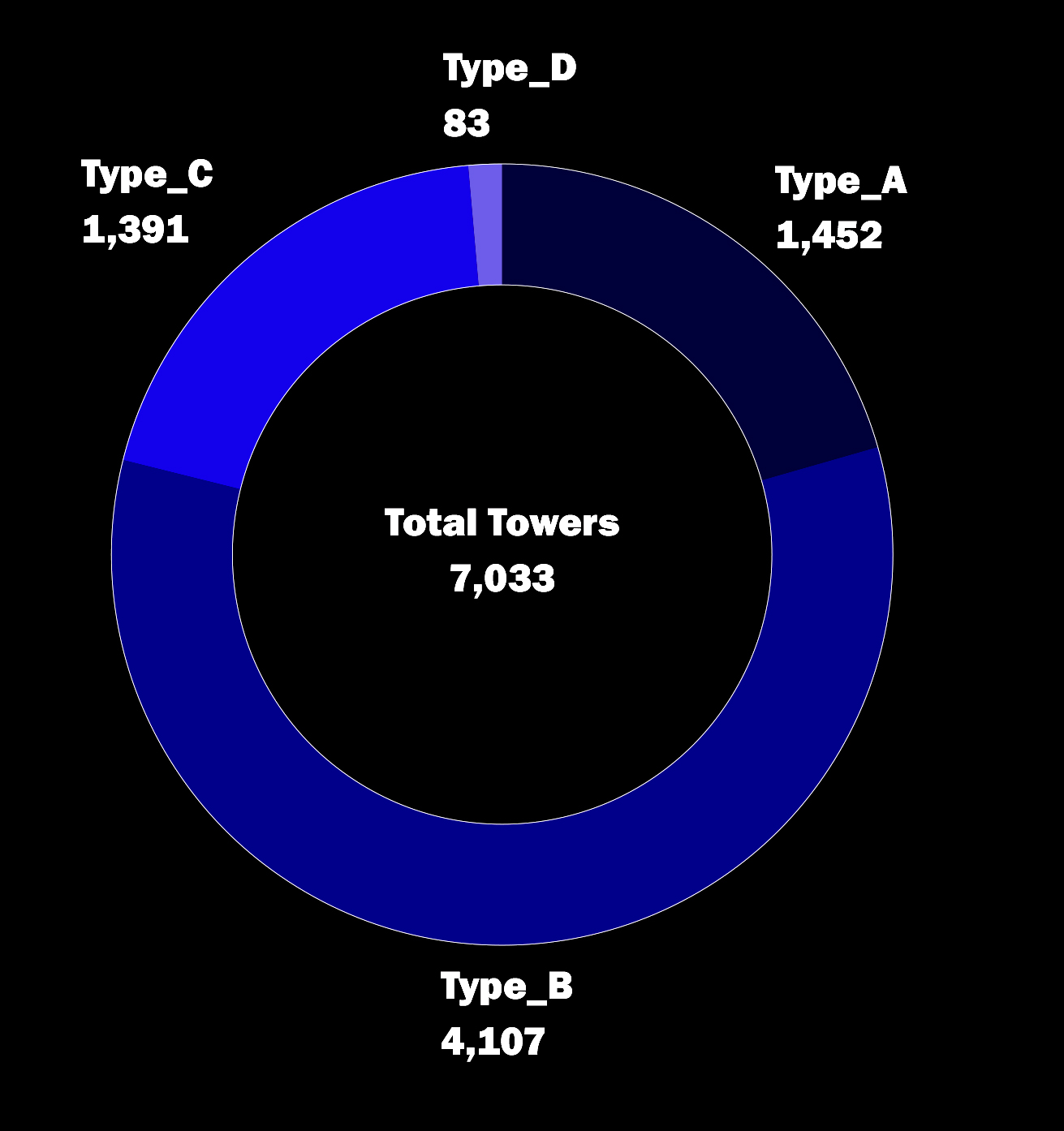
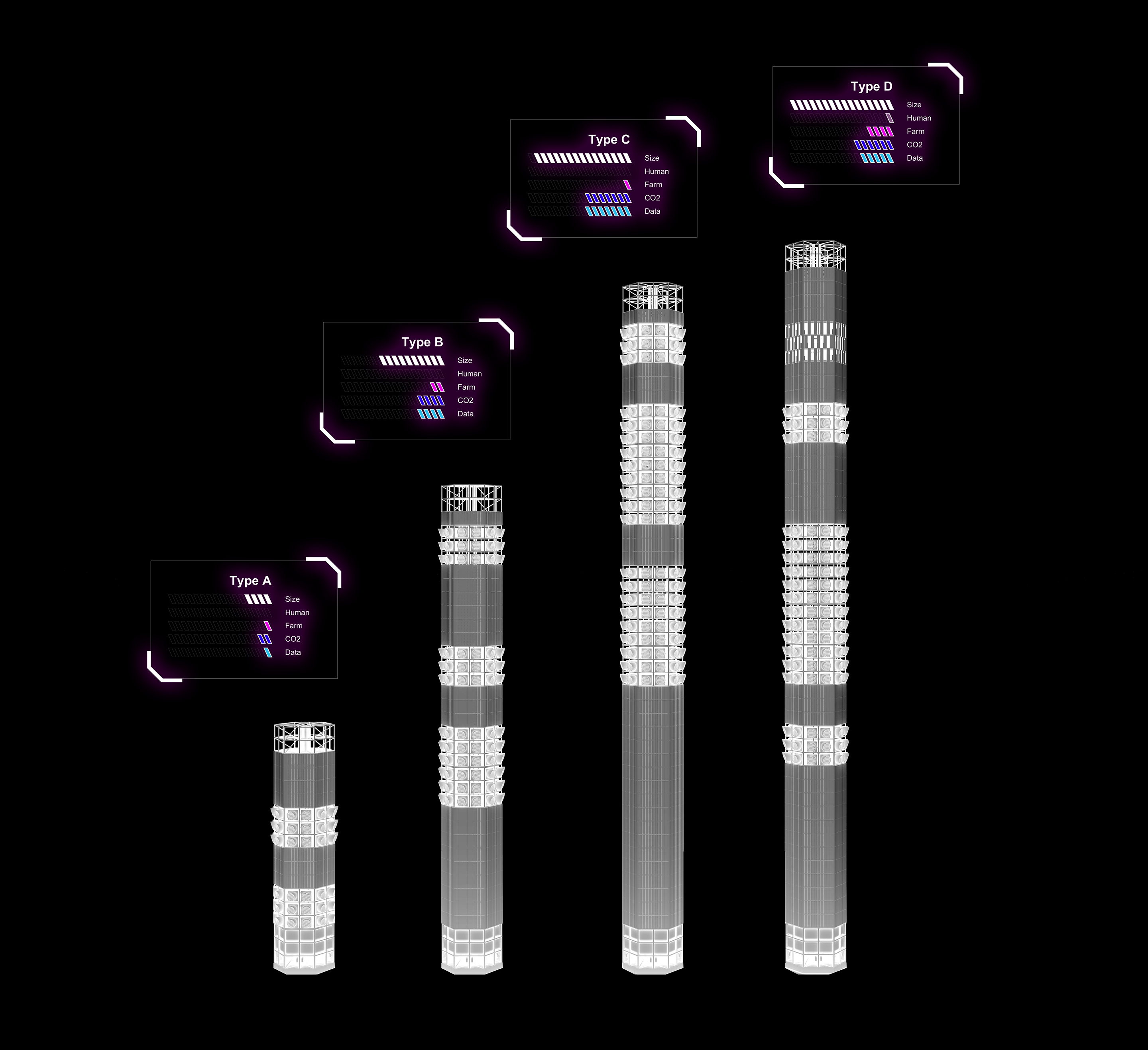
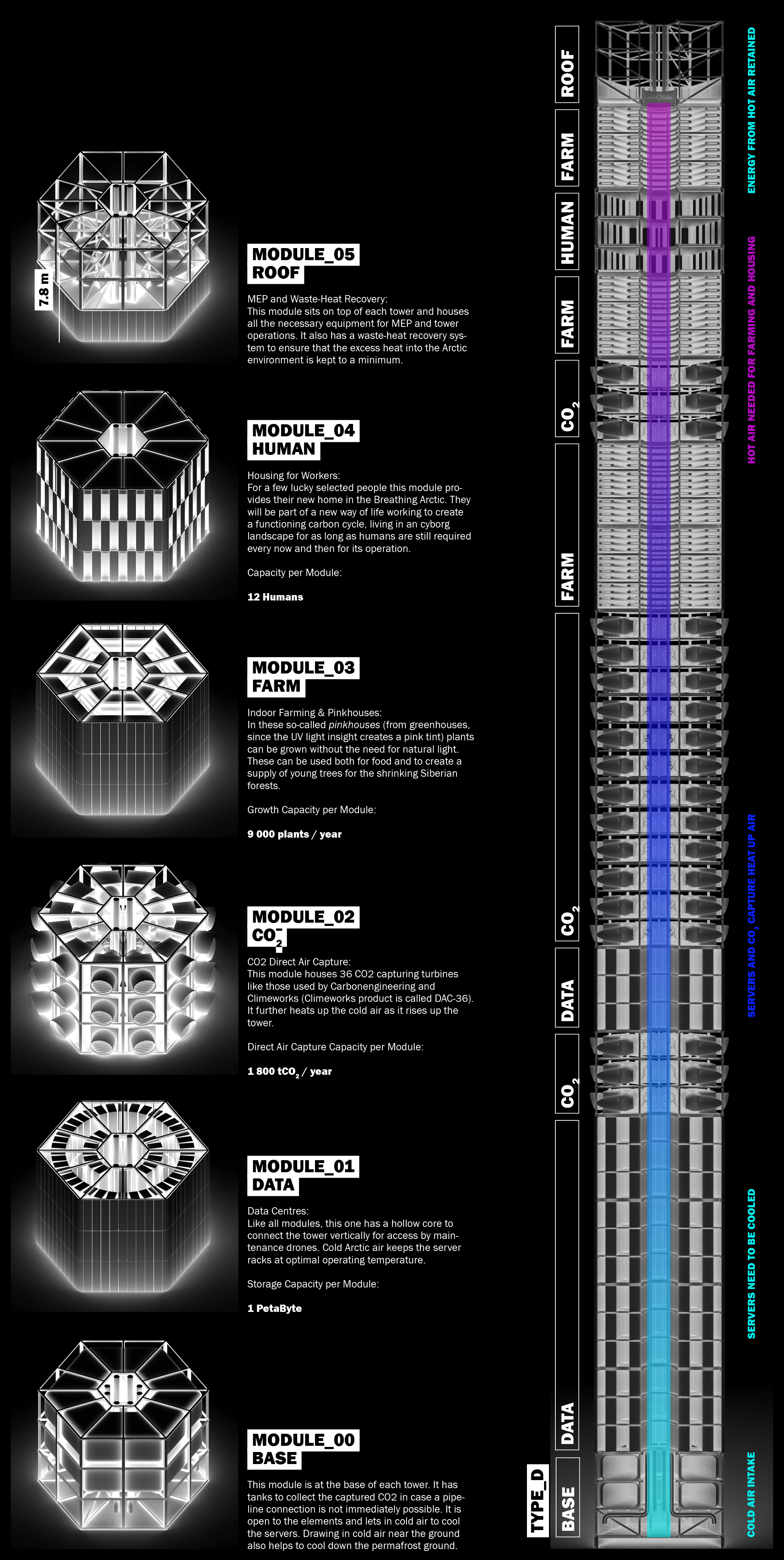
Each module is 7.8m in height and 12m in diameter. Structures in harsh environments such as the Arctic are mostly constructed as a whole off-site and shipped with specialist ships to their operating location to minimise manual labour on-site. This technique has been employed for all the existing oil and gas infrastructure. At their operating location they will be stacked and fixed on top of each other with appropriate foundations. To limit the warming of the permafrost ground and to minimize the amount of covered land, the vertical stacking is paramount to a sustainable deployment. It furthermore enables a natural airflow where cold air is drawn in on low level. This further cools the frozen ground. The air then progresses upwards through the different building zones, cooling the servers of the data centre modules. Then this warm air helps to keep the CO2 turbines at their optimal operating temperature. As the filter in the turbines need be briefly heated to 100 degrees to release the CO2, the heated-up air progresses to the farming modules where it creates a plant-friendly climate. The plants grown in these “pinkhouses” can be either used for food production for the inhabitants or to grow small non-deciduous trees that can later be planted further south to regrow the shrinking Subarctic forests. Some of the captured CO2 is released into the farming modules to enhance the growth speed and further trap CO2. One of the four tower types also features a human module. The warm air reaches this one at the very top of the tower. Access can be maintained via a simple maintenance lift in the core. On three levels, 12 inhabitants can live and work together while having direct access to fresh food supplies. As most of the facilities are non-human, verticality is not seen as an obstacle. Drones will conduct most of the maintenance and harvesting tasks.
________
By Rosa Pintos Hanhausen and Lukas Utzig
CHORA Conscious City Chair for Sustainable Planning and Urban Design
Technical University Berlin, Department of Architecture
2020